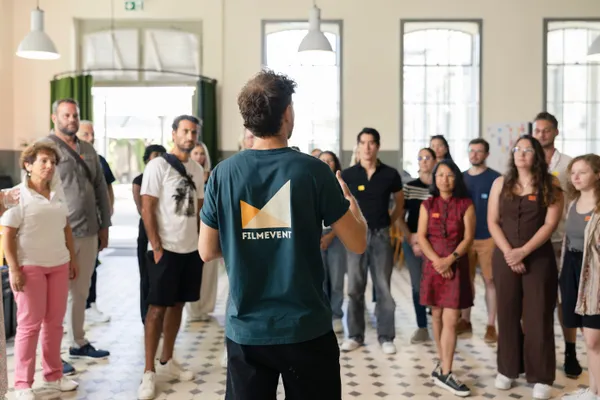
80 people, one team event, and at the end only 15 of them were really in. The rest watched, clapped, maybe held a beer. Not a disaster, but also not what the briefing promised. Anyone planning team events for large groups knows this pattern. It's the rule, not the exception.
The problem isn't group size as such, it's the format. Most team event classics were built for small groups: bowling runs six per lane, an escape room caps at eight, a cooking class works for twelve. Scale that to 80 or 200 and you end up either with waiting zones or with spectator galleries. Either way, a large chunk of the workforce mentally checks out.
Why classic formats break the moment the group grows
There's a psychological threshold somewhere between twelve and fifteen people. Above that, a group breaks down into subgroups automatically. Any format that doesn't anticipate this gets it unstructured: three tables are chatting, two people stand at the edge, one person dominates attention. That isn't a weakness of the participants, that's basic group dynamics.
Good large-group formats accept this effect and work with it, not against it. They create small units with a clear task and bring them back together at the end. That's exactly what happens at a Filmevent.
One group, many small crews
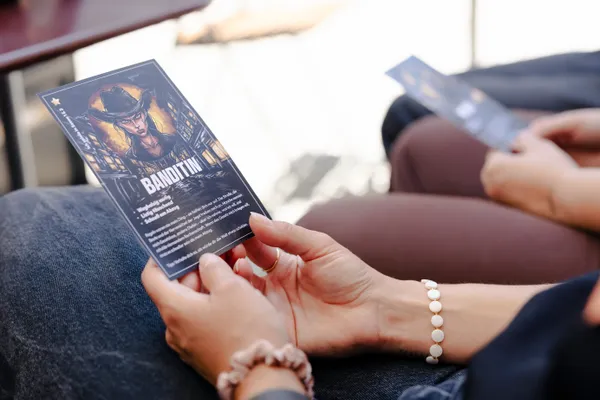
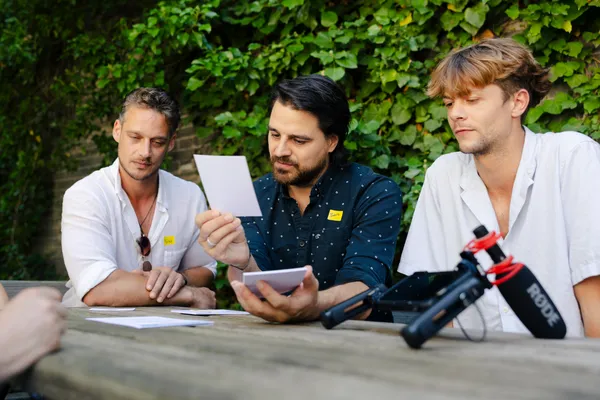
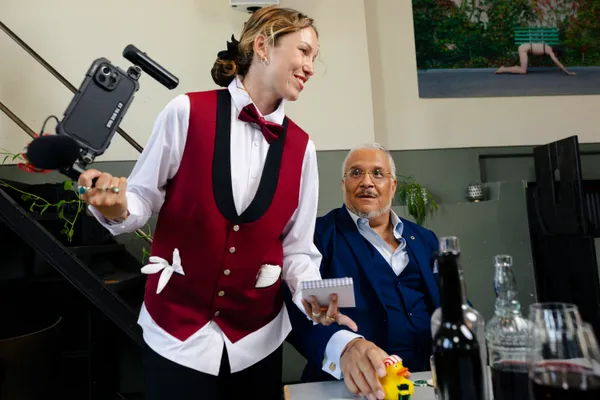
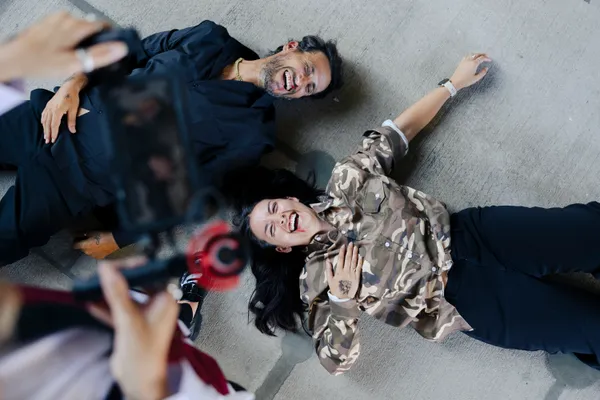
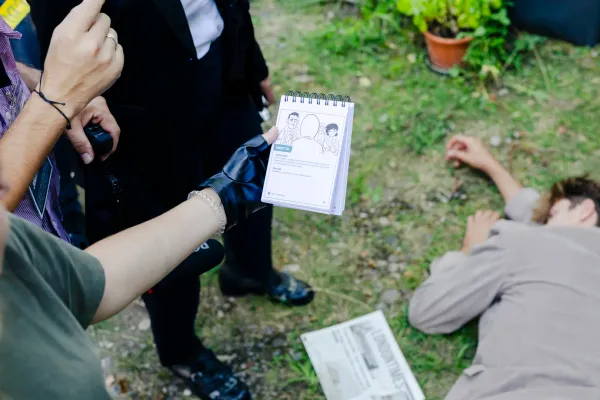
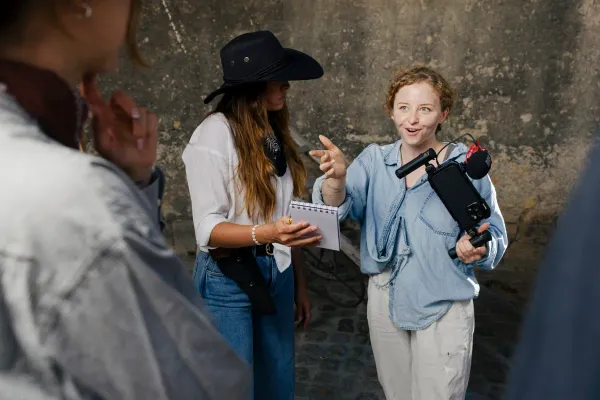
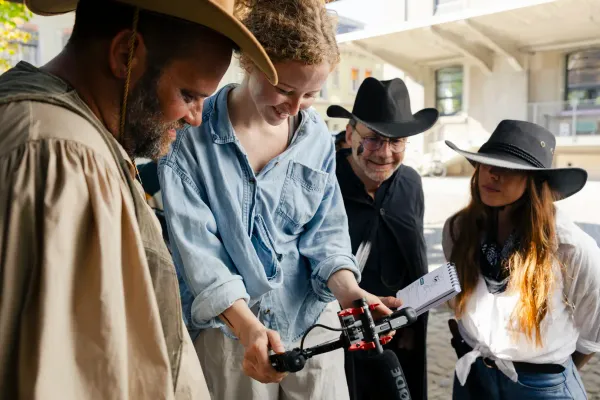
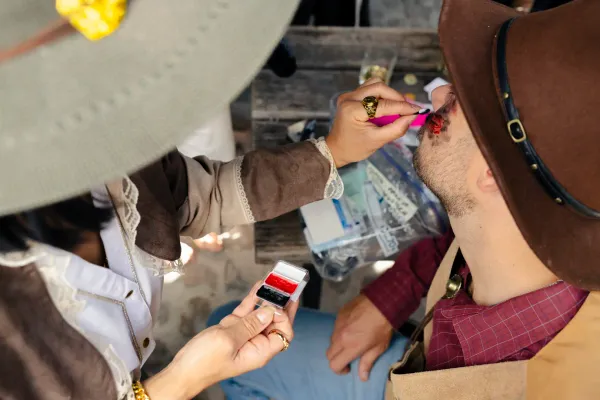
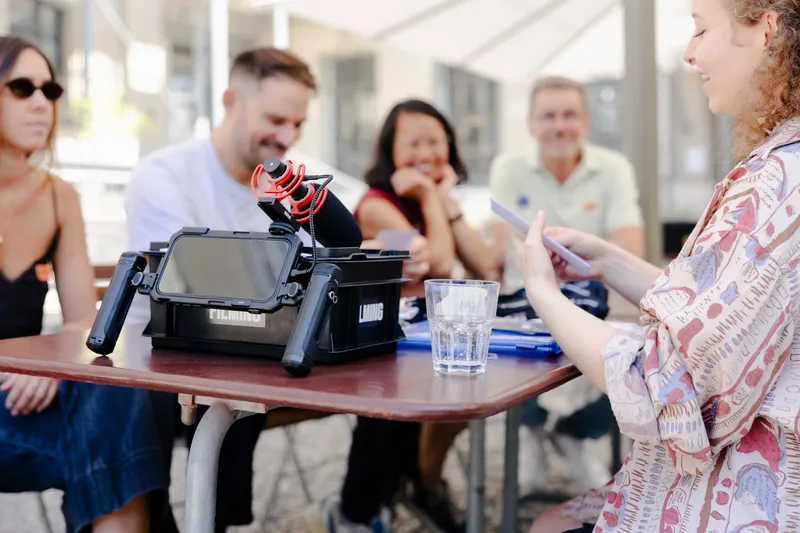
The workforce is split into film crews, usually eight to twelve people per crew. At 80 people that's eight crews running in parallel, at 200 it's twenty. Each crew shoots its own short film. Its own story, its own roles, its own shooting plan. Director, camera, acting, set, organisation - every role exists because without it the film doesn't get made. That isn't symbolism, that's necessity.
This split has two effects. First: every person is in a team small enough that their contribution is visible. Second: because multiple crews run in parallel, a healthy dose of creative pressure builds. Nobody is sitting on the couch waiting for the other half to finish.
The logistics behind it stay invisible
For participants it feels effortless. In the background the Filmevent team is orchestrating parallel timelines, locations, catering windows and technical handovers. That's the work nobody is supposed to see - and exactly why it's decisive for large groups. A format that doesn't hold up backstage falls apart at 100 people.
Most organisers find this out the first time they try a format with more than 50 people. We run 300+ events a year, many of them between 80 and 250 participants. Scaling happens through proven crew splits and hosts who guide several teams at once.