Collaboration can't be decreed. You can define processes, schedule meetings, write roles onto a slide. But real collaboration only emerges when people have a shared goal they're actually interested in. That's the uncomfortable finding behind most team-building workshops: without a concrete, shared undertaking that everyone genuinely wants to deliver, every exercise stays theoretical.
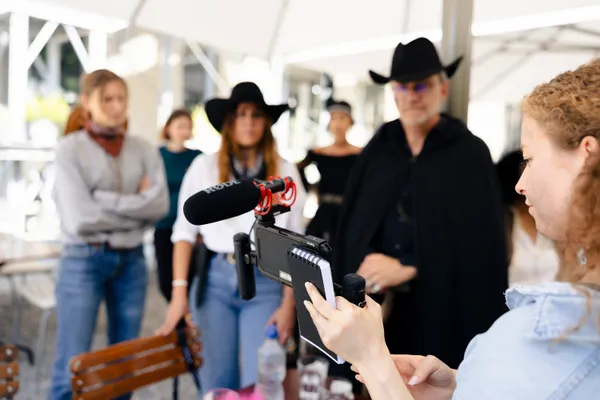
A shared story is such an undertaking. It has a beginning, a middle, an end. Someone has to tell it, someone has to stage it, someone has to film it, someone has to edit it. Suddenly everyone has a task that visibly makes sense. And suddenly what every team event hopes for actually happens: people talk to each other because the story demands it.
Stories are older than team building
Long before there were workshops and whiteboards, groups organised themselves around stories. Around the fire, at the family table, in the theatre. There's a reason for this that goes well beyond culture: stories are the most natural format the human brain has for storing information. People who experience a story together still remember details weeks later. People who consume the same information as a slide deck are back at zero a week later.
For a team event that means: a format built on a story has a structural advantage over a format made of stitched-together exercises. The story provides anchoring, the story provides meaning, the story provides a shared reference point - even after the event.
How the script steers collaboration
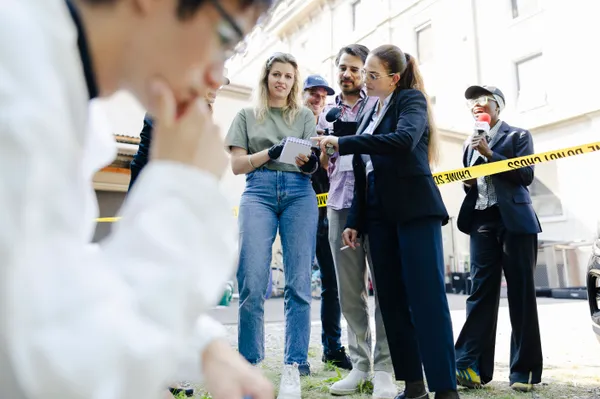
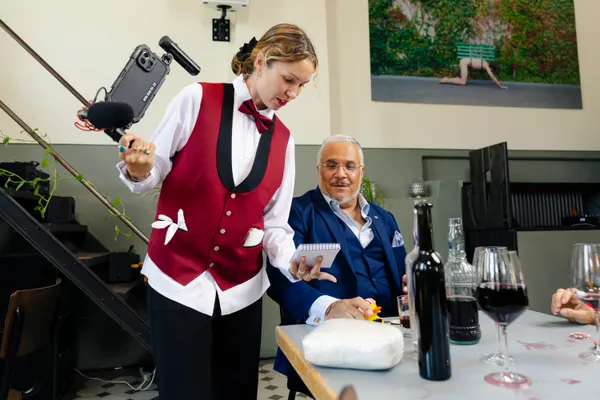
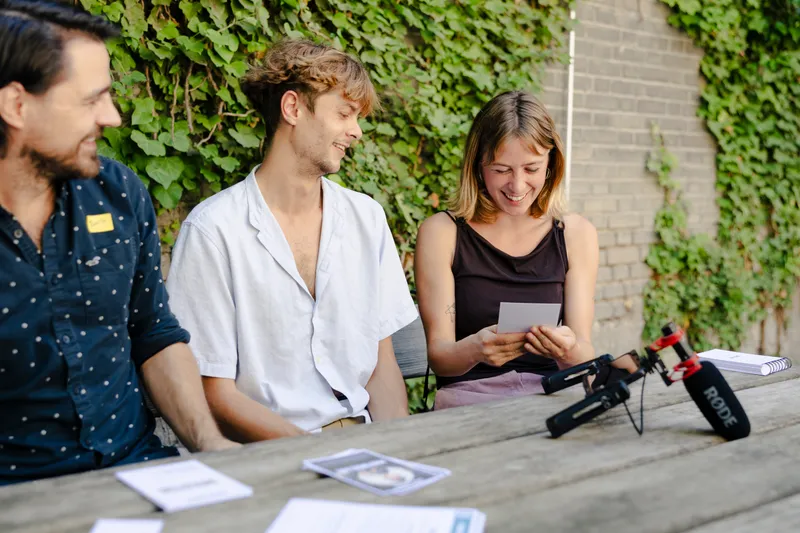
At a Filmevent every crew receives a pre-written script and a shot list. That might seem surprising at first - shouldn't a creative format be about inventing freely? That's exactly where the trick lies. The script removes the burden of "we now have to come up with a story" and clears the room for what's actually important: how do we stage this together?
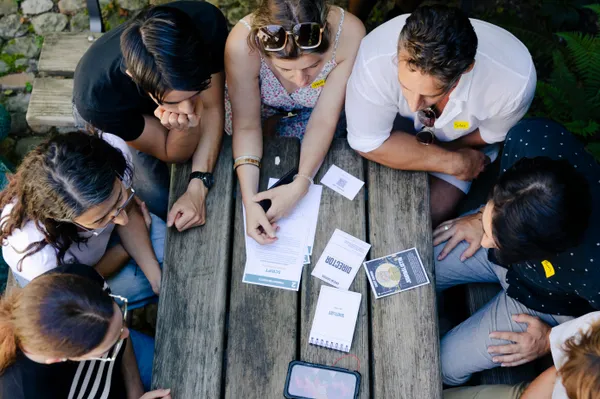
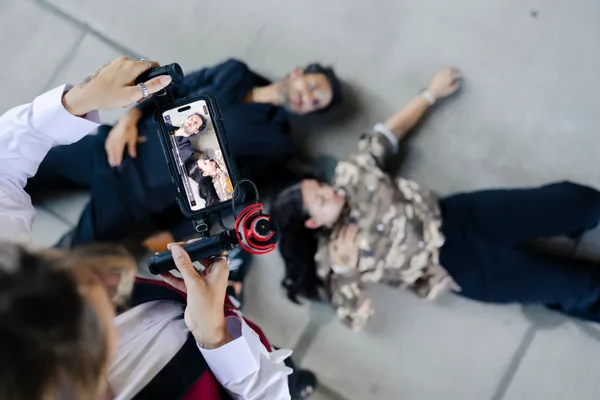
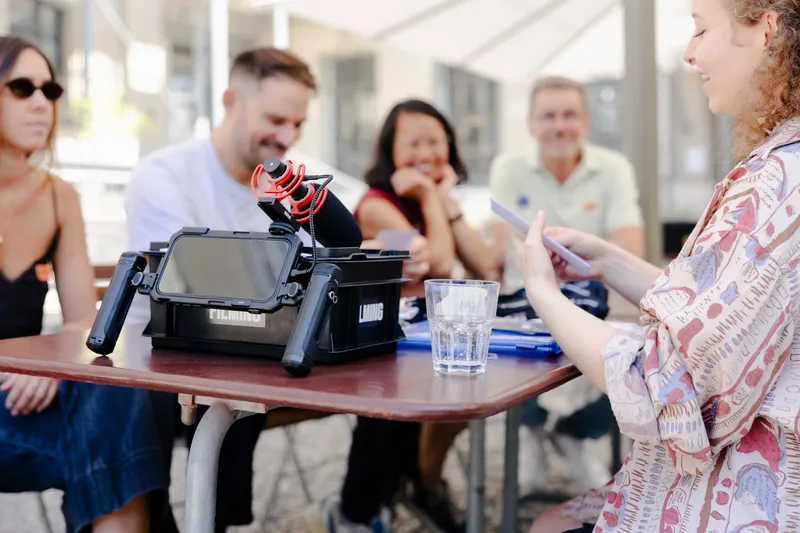
What concretely happens in a crew? Eight people sit with a script in front of them. They debate: who takes which role? Where should this scene play? Which camera angle works better, static or tracking? Those aren't artificial team exercises, those are real decisions with consequences. If the camera sits badly, you see it in the finished film. If a scene runs longer than planned, there's no time for the finale. Collaboration has immediate consequences.
Genre as identity anchor
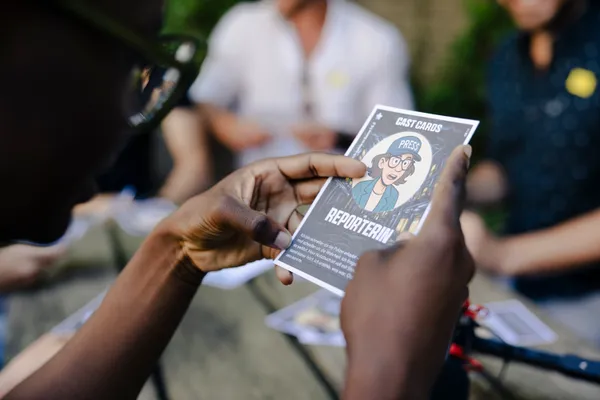
Each crew picks a film genre at the start - romcom, crime, western, sci-fi. That isn't a cosmetic choice. The genre sets the tone of the collaboration for the whole day. A crime crew works differently than a romcom crew, because the genre demands a shared style. This alignment happens within minutes and becomes the unwritten contract of the day.
What we see in practice: crews that take their genre choice seriously produce better films - and work together better. That isn't coincidence. The genre creates a shared taste, a shared expectation, a shared language. Three things that normal work routines rarely produce so quickly and so clearly.