Film event:

What to Expect

Surprisingly simple, surprisingly good

Most teams booking a Filmevent for the first time imagine something complicated. Equipment, scripts, preparation, the pressure of acting. In reality the entry is remarkably uncomplicated. We run over 300 events a year with many participants who'd never held a camera before - and twenty minutes in they're working as if they'd always done this. Here's what happens step by step.

What we often hear from teams before their first time: "I can't act", "I don't want to be on camera", "This is going to be awkward". What we hear after the premiere: "That was easier than I thought", "Time flew by", "When can we do this again?" The gap between expectation and experience is larger at a Filmevent than at most other team event formats - and consistently in the same direction.

Arrival and briefing: the first 30 minutes

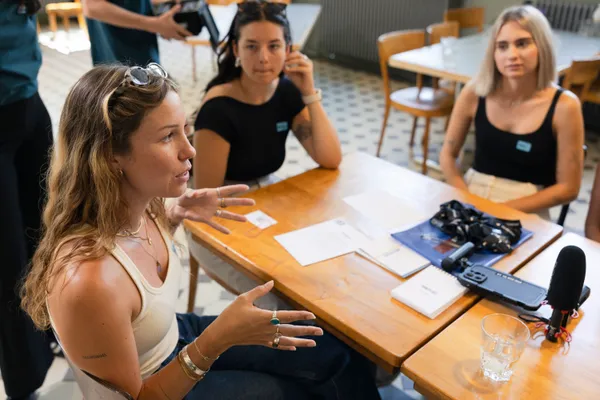
The crew arrives at the location, usually a hotel, event space or venue. The Filmevent team is ready, rooms are prepared, equipment is set up. After a short welcome the briefing begins: what's today about, how does the day flow, what happens when? That takes fifteen to twenty minutes, not an hour. We don't want to load the crew with theory, we want to get them into action fast.

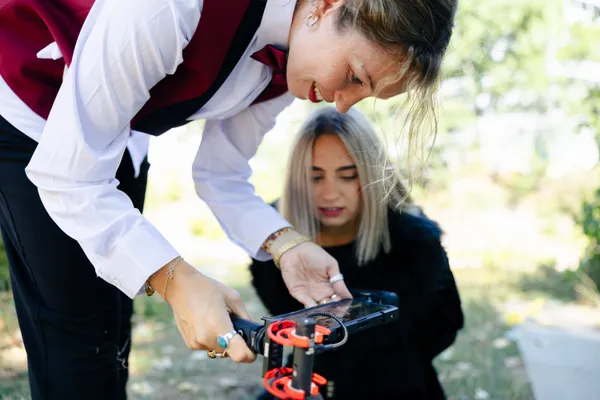
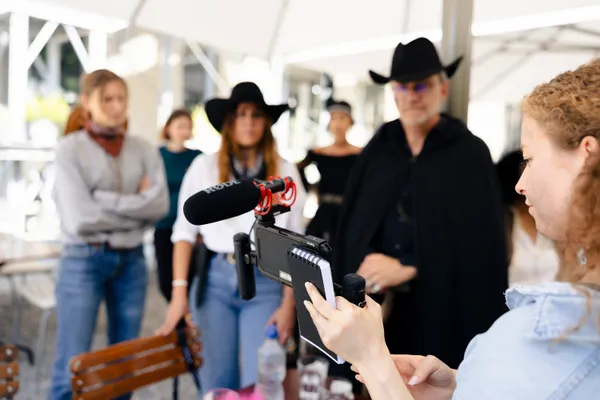
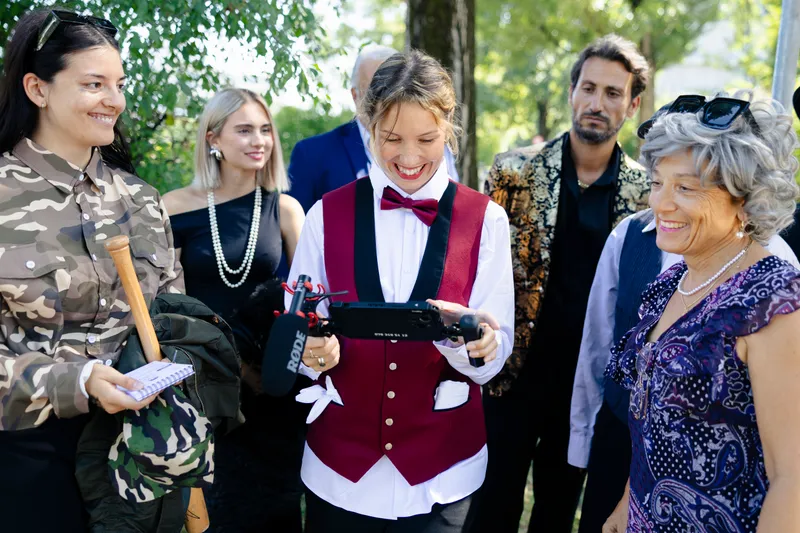
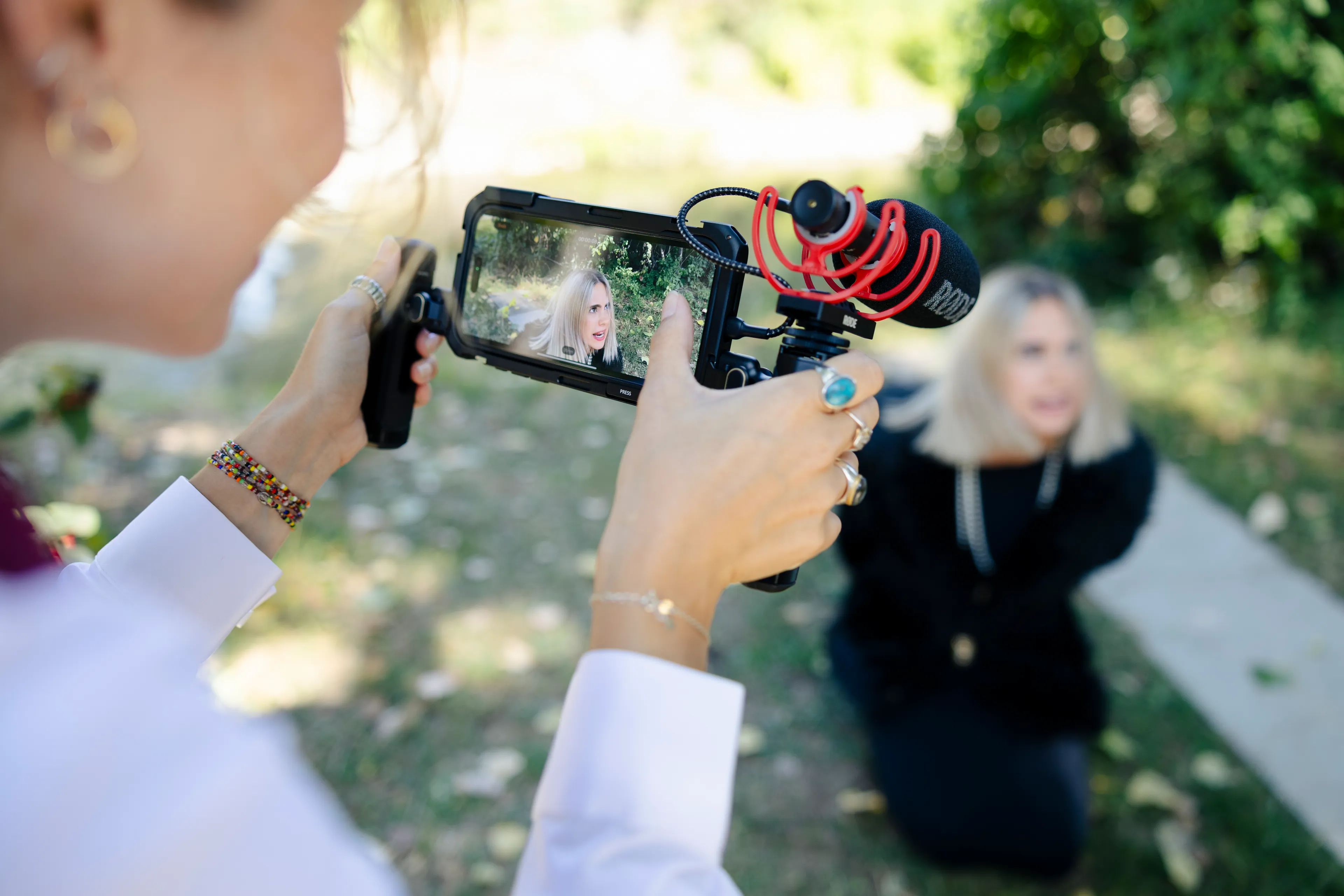
The briefing also explains the variant format. With Basic and Plus the crew works with a smartphone and our app, accompanied by a host. With the Pro variant a real filmmaker joins the set and guides the crew through the day. Both variants produce a finished film at the end - the Pro variant with more cinematic depth and the option to substantially adapt the script.

Genre and roles: the next 30 minutes

Each crew chooses its genre - romcom, crime, western, sci-fi. This choice is the first real team decision of the day and usually happens in five minutes. It matters more than it looks because the genre sets the tone for the coming hours. A crew picking western already thinks differently about framing and pacing from the moment they read the script than a romcom crew.

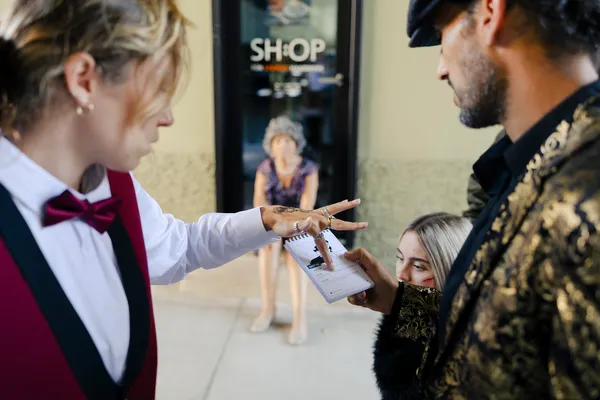
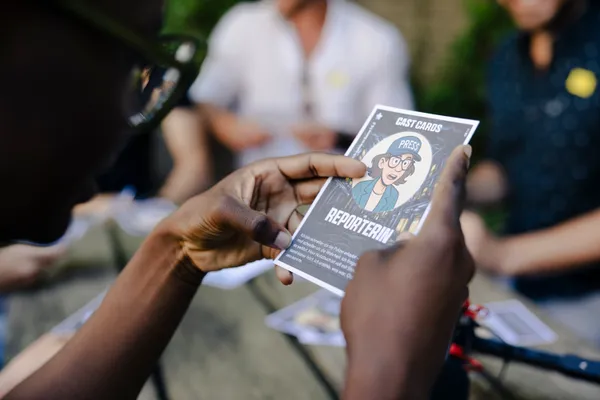
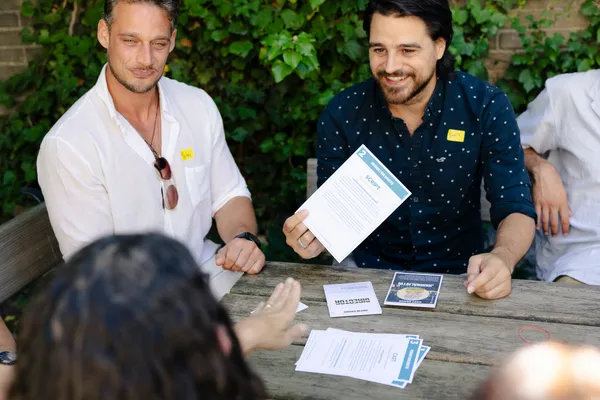
Then the roles get distributed. Directing, camera, acting, set, organisation. That happens inside the crew, without a stage, without competition, simply at the table. Whoever signs up for camera gets camera. Whoever wants to direct directs. Whoever wants to hold back first takes set or continuity. We only step in if a crew is spinning in circles - mostly it sorts itself out, because the crew knows better than any external moderator who fits where.

The first shooting phase: 60 to 90 minutes of doing

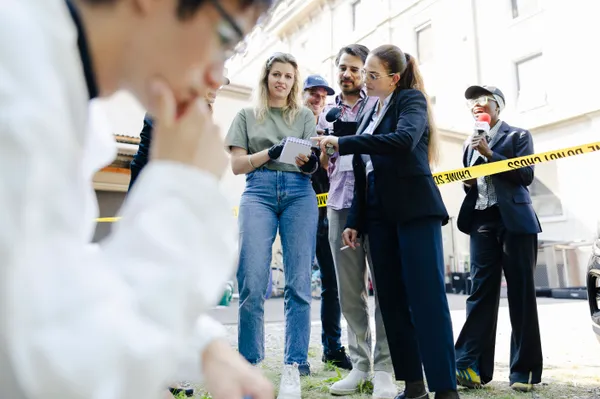
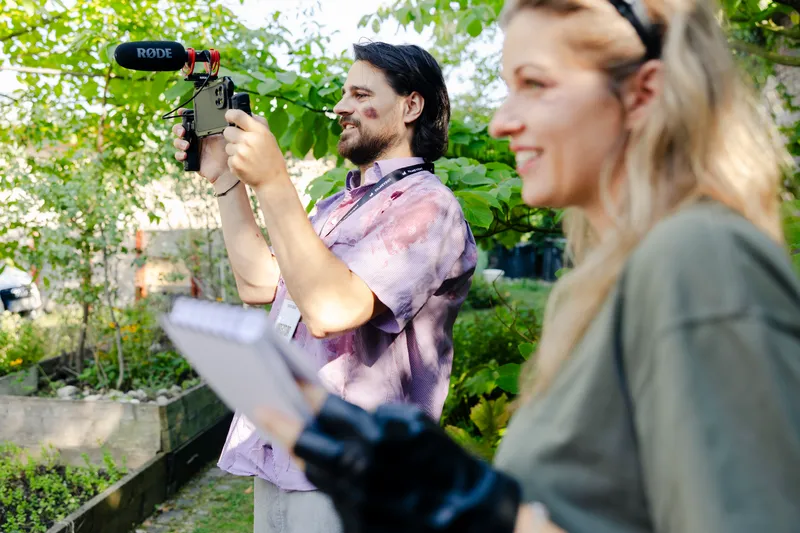
Now actual filming starts. The crew has its script, the shot list defines the angles, the set is built. The first takes are always bumpy. The first scene gets shot twice, three times, sometimes four, until it works. That isn't incompetence - it's the normal rhythm of film. On any real film set every shot gets done multiple times.

What surprises most crews in this phase: how quickly they get into flow. After fifteen minutes the initial awkwardness is gone, after thirty everyone is thinking only about the scene, after an hour half the team is improvising small adjustments to the script, often superior to the original. We see this transition at almost every crew - it happens by itself, once the first takes are in the can.
The premiere moment

Break and second shooting phase

After the first shooting phase comes a short break: coffee, a snack, some air. This break isn't only recovery, it's also the moment the crew gets to put what they've shot in context. What worked, what was sluggish, where does the second phase need adjustment? This self-reflection isn't imposed by us - it happens because the team has half a shooting day behind them and can see what works and what doesn't.

The second shooting phase runs another 45 to 60 minutes. Here come the harder scenes, the action moments, the finale. Often the best takes happen here, because the crew is now in sync, the camera operator stands confidently, the actors no longer have to perform composure. For many crews the last scene of the day is also the best - although or precisely because by then everyone is tired and a bit silly.

Post-production and apero

While the Filmevent team works on post - cut, music, colour, subtitles - the crew goes to apero. Something happens here that can't be staged: the crews mix. Someone from the western team asks the romcom crew how they shot their ending. A sci-fi crew talks about their set build. The parallel shooting time, which until then had only been noise from the next room, now gets faces and stories.

How long post-production takes depends on the variant. With the Basic variant half an hour of apero is usually enough; with the Pro variant and its more elaborate edit, a bit longer. This time isn't downtime - it's part of the experience. The suspense over whether your own material has actually become a coherent film builds up exactly in this waiting window.

The premiere

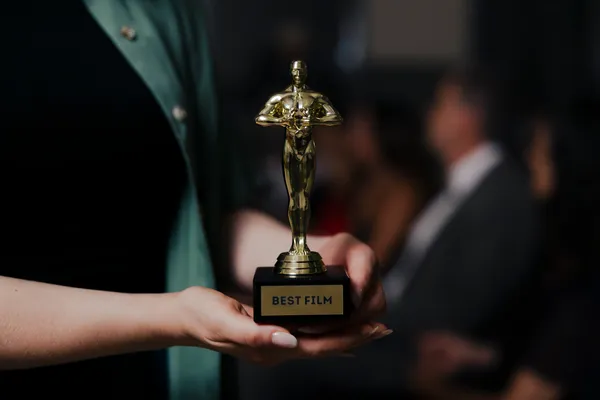
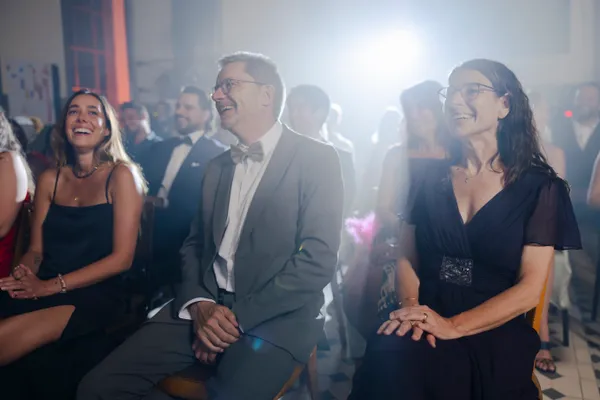
At the end all crews come together for the premiere. Big screen, dimmed lights, all films back to back, two to three minutes each. This is mostly the best part of the day and the reason we don't outsource it even after 300+ events. You see what the other crews made of the same format, laugh at the bloopers, marvel at the good scenes, recognise unexpectedly good performances from colleagues you'd never have pictured on a stage.

The premiere usually runs 30 to 45 minutes depending on the number of crews. Afterwards the apero continues, often with a noticeably different energy than before the premiere - the shared experience of the last few hours has fully broken the ice, and conversations get concrete. Whoever acted in the western film asks how the crime crew resolved their plot. Whoever directed compares notes with directors from parallel crews.

What you take with you

After the event each crew gets their finished film. Within a few days as a download, ready to share on the intranet, at the next staff event, in onboarding. That isn't the main result - the main result is the day itself. But the film is the anchor that keeps the memory available across months.

What most teams don't expect: how unstrenuous the day feels in retrospect. Despite the shoot pace, several hours of concentration, new roles for many - crews mostly leave the event more relaxed than they arrived. There's a reason for that: a shared goal that actually gets achieved is one of the few experiences that rarely happens so clearly and concretely in the working day. It resonates afterwards, even though the shoot itself was technically demanding.

ROLL CAMERA

Get your team event without commitment.

Send us a quick note with the key details of your occasion. We get back to you within 4 hours with a first price overview and show you which team event format fits you best.

+41 76 345 60 22 mail@filmevent.ch

Sarina & Sarah

Sarina und Sarah von Filmevent

Request a free offer

Within 4 hours you receive a first price overview and an idea of which Filmevent variant fits your occasion - free and without commitment.

Group size